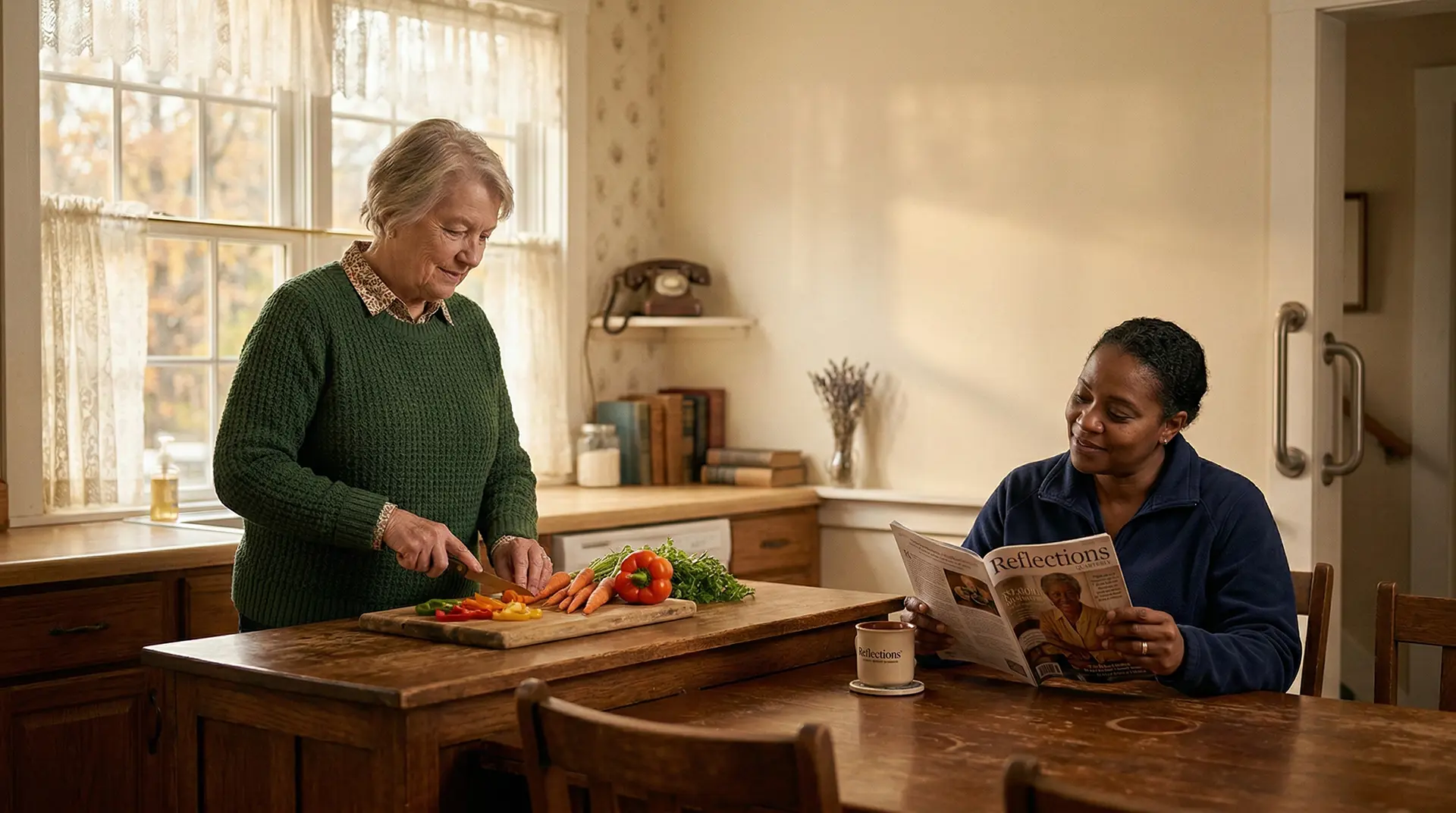

Something has shifted in the way families think about aging and care. For decades, the default assumption was that when an older adult needed help, the next step was some kind of facility, assisted living, a nursing home, or a memory care unit. That’s changing.
More families are choosing to keep their loved ones at home, with professional support, for as long as possible. The reasons are practical, financial, and deeply personal. And the trend is accelerating.
What’s Driving the Shift
People want to age at home. Survey after survey shows that the overwhelming majority of older adults want to stay in their own homes as they age. It’s not just about comfort, though that matters. It’s about identity, autonomy, and being surrounded by the life they’ve built. Home means something, and families are increasingly finding ways to honor that preference.
The economics have changed. Facility-based care is expensive, and costs continue to rise. For many families, a combination of in-home care and family support is more affordable and more flexible than a residential placement, especially in the early and middle stages of care needs.
Care options have expanded. Twenty years ago, the home care landscape was much more limited. Today, families have access to a wider range of services, from companion care and personal care to skilled nursing and specialized dementia support, all delivered in the home. Technology has expanded what’s possible too, with remote monitoring, telehealth, and medication management tools supplementing in-person care.
The pandemic changed perspectives. The experience of the past few years fundamentally altered how many families view institutional care settings. Concerns about infection control, visitor restrictions, and quality of life in facilities pushed many families toward home-based alternatives, and a lot of them aren’t going back.
What This Means for Families
The growing demand for in-home support is, on balance, a positive trend. More options, more flexibility, and more respect for individual preferences are all good things.
But it also creates challenges. The supply of qualified caregivers hasn’t kept pace with demand. Finding the right person, especially someone experienced, reliable, and a good personality match, takes more effort than it used to. Wait times can be longer. Competition for the best caregivers is real.
This is one of the reasons we always encourage families to start the process before they’re in a crisis. When you have time to be selective, you get better outcomes. When you’re scrambling after a hospitalization, you take what’s available.
Related reading: Questions to Ask Before Hiring In-Home Help
The Caregiver Workforce Challenge
Behind the growing demand is a workforce reality that deserves attention. Caregiving is physically and emotionally demanding work, and it hasn’t always been compensated or respected in proportion to what it requires. Recruiting and retaining quality caregivers is one of the biggest challenges facing the home care industry.
Families can be part of the solution. Fair pay, clear expectations, professional treatment, and genuine appreciation all contribute to caregiver retention. When a caregiver feels valued, they stay. And continuity, as we’ve written about before, is one of the most important factors in quality care.
Related reading: Ethical Considerations in Private Caregiving
What’s Next
The trend toward home-based care isn’t slowing down. If anything, it’s accelerating as technology improves, care models evolve, and families become more informed about their options.
For families in Central New York, this means more resources and more possibilities than ever before. It also means the value of working with someone who knows the landscape, who can help you navigate the options, find the right caregivers, and build a plan that actually works, has never been higher.
The Reflections Home Care Registry was built for exactly this moment. We connect families with vetted, experienced caregivers who are committed to this work, and we support both sides of the relationship to make sure it lasts.
For families who need help thinking through the bigger picture, from what level of care is appropriate to how to coordinate across multiple providers, Reflections Management and Care provides the guidance and coordination that ties everything together.