When families think about home safety for an aging parent, they usually picture the big things: grab bars in the shower, a stair lift, maybe removing that old clawfoot tub. And those are important.
But in our experience, the incidents that send older adults to the emergency room rarely involve the obvious hazards. They involve the small, everyday things that nobody thought to address, things that have been in the home for years without causing a problem until, suddenly, they do.
Here are the quiet risks that deserve attention.
Throw Rugs
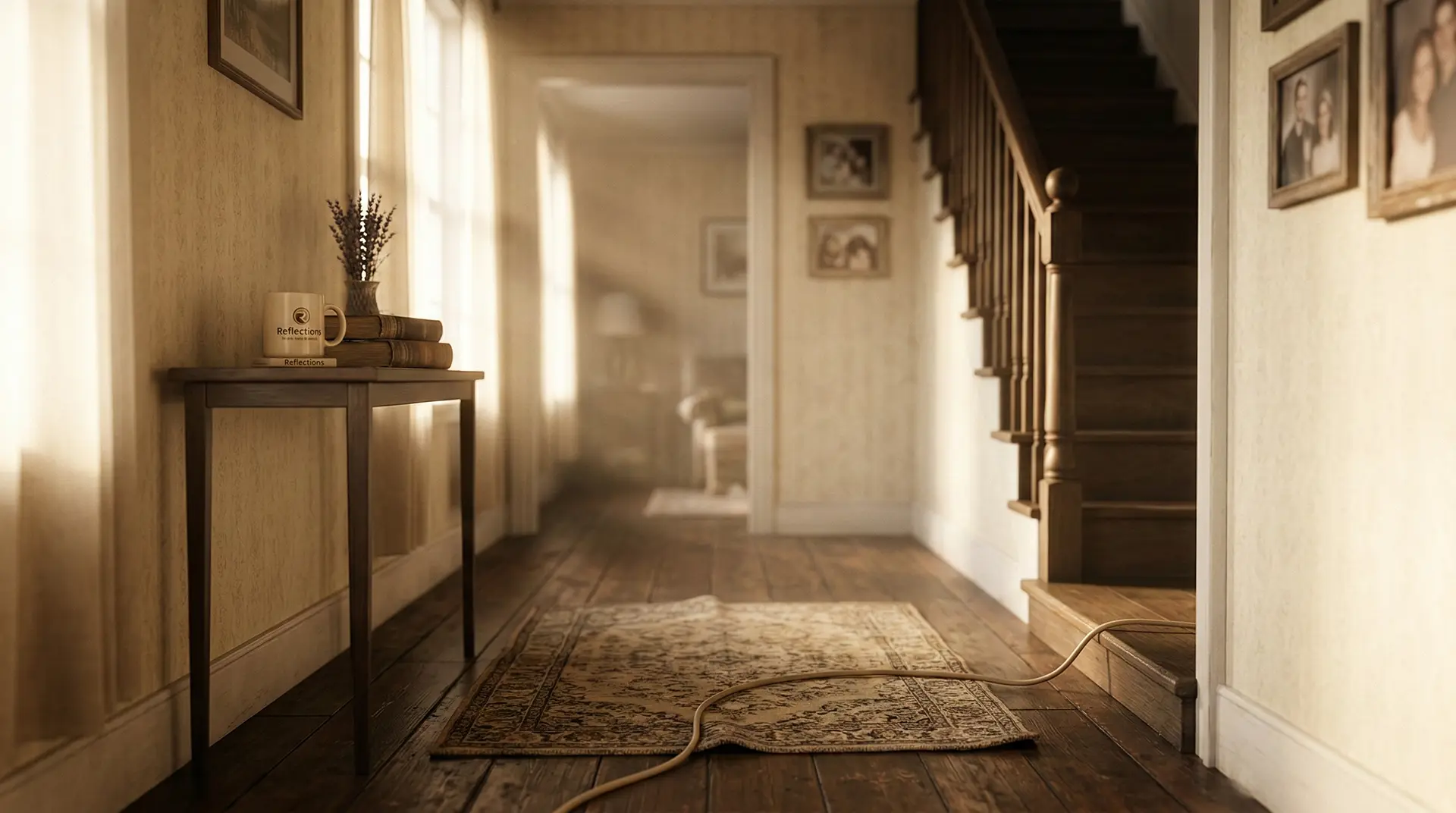
This one tops the list for a reason. Throw rugs are one of the most common tripping hazards in any home, and they’re everywhere. Kitchens, bathrooms, hallways, entryways. They shift, they bunch up, and they catch feet.
For someone with reduced balance or shuffling gait, a throw rug isn’t a decoration. It’s a fall waiting to happen. The simplest fix is also the most effective: remove them. If that’s not an option, secure them with double-sided carpet tape or non-slip pads.
Poor Lighting
As vision changes with age, lighting becomes much more important. A hallway that’s “fine” for someone in their forties can be genuinely dangerous for someone in their eighties.
Pay attention to transition areas, the spots where you move from one room to another, from inside to outside, from upstairs to downstairs. These are where falls are most likely, and they’re often the most poorly lit.
Adding nightlights along hallways and in bathrooms, increasing bulb wattage, and making sure light switches are accessible from both ends of a room are small changes that make a measurable difference.
Bathroom Hazards
The bathroom is the most dangerous room in the house for older adults, and it’s not just about the bathtub. Wet tile floors, low toilet seats, hard-to-reach towel racks, and slippery shower floors all create risk.
A non-slip bath mat, a raised toilet seat, grab bars near the toilet and inside the shower, and a handheld showerhead can transform the bathroom from a daily hazard into a manageable space. These modifications are inexpensive and can usually be installed in an afternoon.
Related reading: The Most Crucial Aging in Place Home Modifications
Clutter in Walkways
Over time, homes accumulate things. Stacks of newspapers by a chair. A side table that narrows a hallway. Shoes by the door. A pet’s water bowl in a high-traffic area. None of these seem like a big deal individually, but each one represents an obstacle for someone with mobility challenges.
Walk through your loved one’s home and pay attention to the paths they use most, from the bedroom to the bathroom, from the living room to the kitchen, from the front door to the car. Are those paths clear? Wide enough for a walker? Free of anything someone might catch their foot on?
Kitchen Concerns
The kitchen presents a unique combination of risks. Reaching for items stored on high shelves, bending to access low cabinets, standing at the stove for extended periods, and handling hot liquids all become riskier with changes in balance, strength, and cognition.
Moving frequently used items to counter height eliminates a lot of reaching and bending. An automatic stove shut-off device provides peace of mind for families worried about burners being left on. And a sturdy step stool with a handrail is far safer than a kitchen chair for reaching high shelves, though eliminating the need to reach at all is the best solution.
Stairways
If your loved one’s home has stairs, they deserve a hard look. Are the railings sturdy on both sides? Is the carpet secure? Are the treads even? Is there adequate lighting at the top and bottom?
For some families, the long-term answer may be moving the bedroom downstairs or arranging the home so daily life happens on one level. But in the meantime, making sure the stairs themselves are as safe as possible can prevent the kind of fall that changes everything.
Outdoor Spaces
The risks don’t stop at the front door. Uneven walkways, cracked steps, icy patches in winter, and poorly lit entryways all create hazards. In Central New York especially, seasonal changes mean outdoor conditions shift rapidly. What was safe in April may be treacherous by November.
Make sure handrails are in place, steps are in good repair, and outdoor lighting is adequate. For winter months, consider a plan for snow and ice removal that doesn’t rely on your loved one doing it themselves.
A Caregiver’s Eye Makes a Difference
One of the under-appreciated benefits of having a caregiver in the home is that they notice things. A rug that’s shifted. A lightbulb that’s burned out. A pathway that’s gotten cluttered. They’re in the space regularly enough to catch changes before they become problems.
If your loved one has a caregiver through the Reflections Home Care Registry, we encourage open communication about the home environment. Their observations can be one of the best early warning systems your family has.
For a thorough home safety assessment, a care manager can walk through the home and identify risks that aren’t always obvious to family members.
Related reading: When Supervision Becomes a Safety Issue