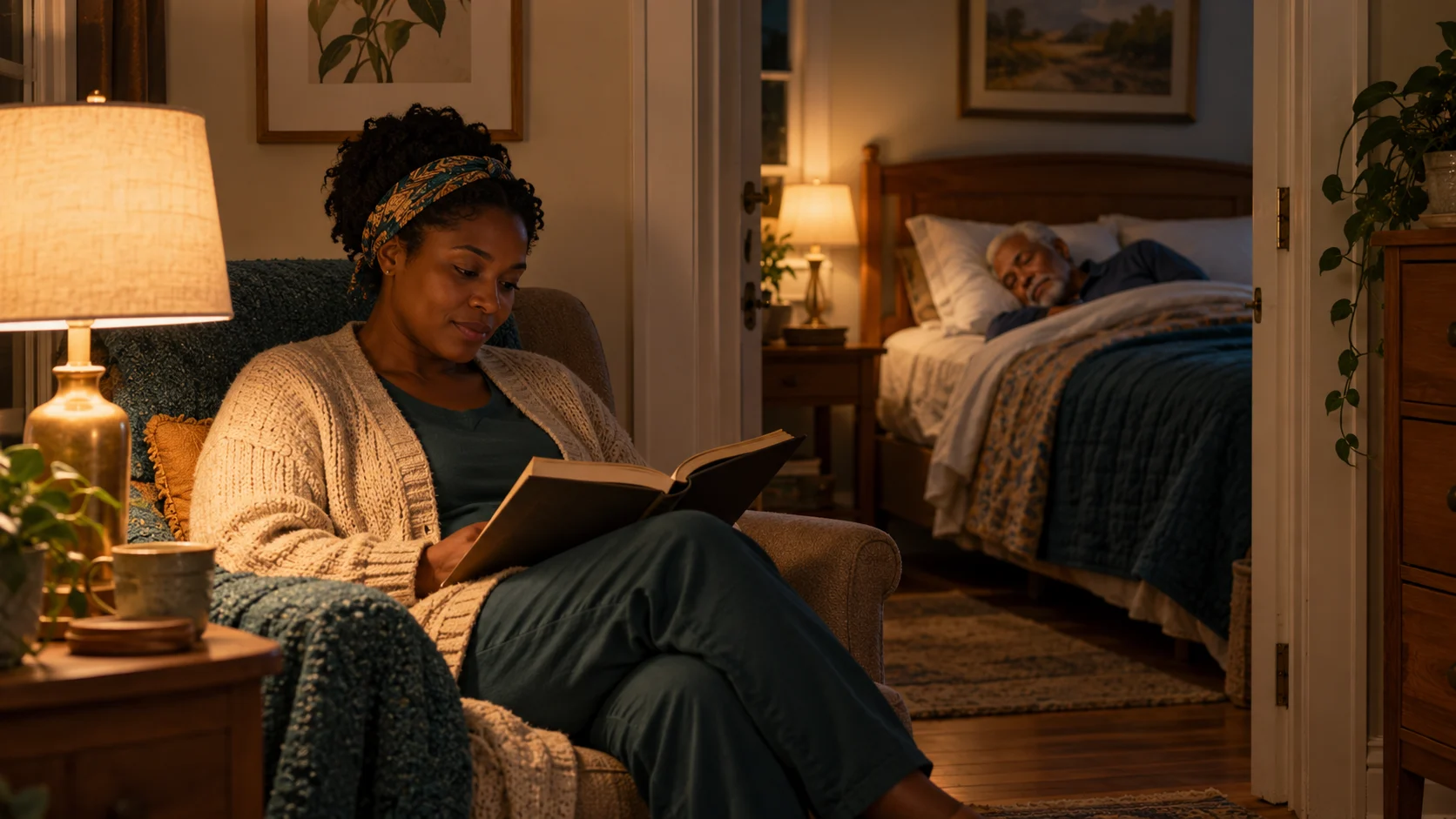
For many families, nights are the hardest part of care. A parent who manages reasonably well during the day may wander, fall, or become confused after dark. A spouse who has been listening for every sound for months may be running on empty.
Hiring an overnight caregiver can bring back sleep and peace of mind. But overnight care works best when everyone is clear from the start about what the nights actually involve. This guide covers what to record, what to decide, and what to agree with a caregiver before the first shift.
Start by Recording What Really Happens at Night
Families often say "Mom needs someone at night," but the details make a big difference to the kind of help you need. For a week or two, keep a simple log:
- What time does your loved one go to bed and fall asleep?
- How many times do they wake, and roughly when?
- What do they need when they wake: the bathroom, reassurance, help back to bed, a drink?
- Do they try to get up and walk on their own?
- Have there been falls, near falls, or wandering?
- How long does it take for them to settle again?
- What time do they usually get up for the day?
This record helps you decide what kind of overnight help fits, and it gives a caregiver a realistic picture before they start.
Awake Overnight or Sleep-In?
Overnight care generally falls into two broad types.
Awake overnight care means the caregiver stays awake and alert through the night. This is usually the better fit when your loved one wakes often, needs frequent help, is at high risk of falling, or tends to wander.
Sleep-in care means the caregiver has a place to sleep and is available if needed. This can work when your loved one sleeps fairly well and wakes only occasionally, but the family wants someone there just in case.
Your night log will usually point clearly to one or the other. If nights are unpredictable, talk through what would happen on a bad night before you decide.
How Overnight Hours Are Counted Matters
When you hire a caregiver directly, you're the employer. New York has specific rules about how working hours, sleep time, and meal breaks are counted for domestic workers, and those rules affect how overnight and longer shifts are paid. The details depend on the arrangement, including whether the caregiver lives in your home.
Before you agree on an overnight schedule, review the New York State Department of Labor's guidance for employers of domestic workers and talk with a payroll or tax professional. Getting this right at the start protects both your family and your caregiver. Our guide to what being a household employer means explains the wider responsibilities.
What to Agree With Your Caregiver
Once you know what kind of overnight care you need, put the details in writing together:
- Shift times. When the shift starts and ends, and how handover works with family or a daytime caregiver.
- Nighttime duties. Help to the bathroom, repositioning, reassurance, checking on your loved one at set times, and anything else specific to your situation.
- What isn't included. Be clear about tasks outside the caregiver's role, especially any clinical care.
- Sleep arrangements. For sleep-in care, where the caregiver sleeps and when they're expected to be available.
- When to wake the family. A fall, illness, unusual confusion, or anything else you want to know about right away.
- Notes. How the caregiver records what happened overnight, so the family and any daytime helpers know how the night went.
- Pay. The agreed rate and how hours are counted, in a written notice.
Skills and Experience to Look For
When interviewing for overnight care, ask about experience with nighttime needs specifically:
- Have you worked overnight shifts before? Awake or sleep-in?
- How do you help someone who wakes confused or upset?
- How do you help someone safely to the bathroom at night?
- What do you do if someone tries to leave the house?
- How do you stay alert through an awake shift?
If your loved one has dementia, our guide to choosing a caregiver for dementia has scenario questions you can adapt for nighttime.
Plan for Coverage and Backup
Overnight care is hard to replace at the last minute. Decide in advance what happens if your caregiver is sick or can't make a shift:
- Is there a family member who can cover a night?
- Could a second caregiver you've met step in?
- How much notice will each of you give for planned time off?
Some families who need care every night arrange more than one caregiver on a rotating schedule, which also builds in backup. Think about what would happen on the first night without coverage, and make sure there's an answer.
Review After the First Few Weeks
Nights change. After a few weeks, check in with your caregiver about how things are going. Is your loved one waking more or less? Is the type of overnight care still right? Are the duties and hours working for both of you? Adjust together as needs change.
How the Registry Can Help
At Reflections Home Care Registry, we learn about your loved one's needs, including what nights look like, and introduce you to caregivers whose experience could fit. You interview them and make the final choice. Our hiring and matching process explains each step. We'll confirm caregiver availability for overnight shifts when we talk.
If nights have become the hardest part of caring at home, contact Reflections Home Care Registry or call 315-497-7200. We'll help you think through what kind of overnight help would bring your family some rest.
This article is general information, not legal or tax advice. Rules for how domestic workers' hours are counted can be complex; please confirm your arrangement with a qualified professional.
FAQ
What's the difference between awake and sleep-in overnight care? With awake care, the caregiver stays alert all night, which suits someone who wakes often or is at risk of falling or wandering. With sleep-in care, the caregiver can sleep and is available if needed, which suits someone who usually sleeps well.
How do I know what kind of overnight care my parent needs? Keep a simple night log for a week or two: when they sleep, how often they wake, what they need, and whether they try to get up alone. The pattern usually shows which type of care fits.
Are overnight hours paid differently in New York? New York has specific rules about how working hours, sleep time, and breaks are counted for domestic workers. Check the Department of Labor's guidance and talk with a payroll or tax professional before agreeing on an overnight schedule.