Hiring help for someone living with dementia is different from hiring help for other kinds of care. The tasks may look similar on paper: meals, personal care, companionship. But the way those tasks are done matters enormously.
A caregiver who rushes, argues, or changes the routine without warning can turn an ordinary afternoon into a hard one. A caregiver who reads the person well, stays calm, and knows how to gently redirect can make the same afternoon peaceful.
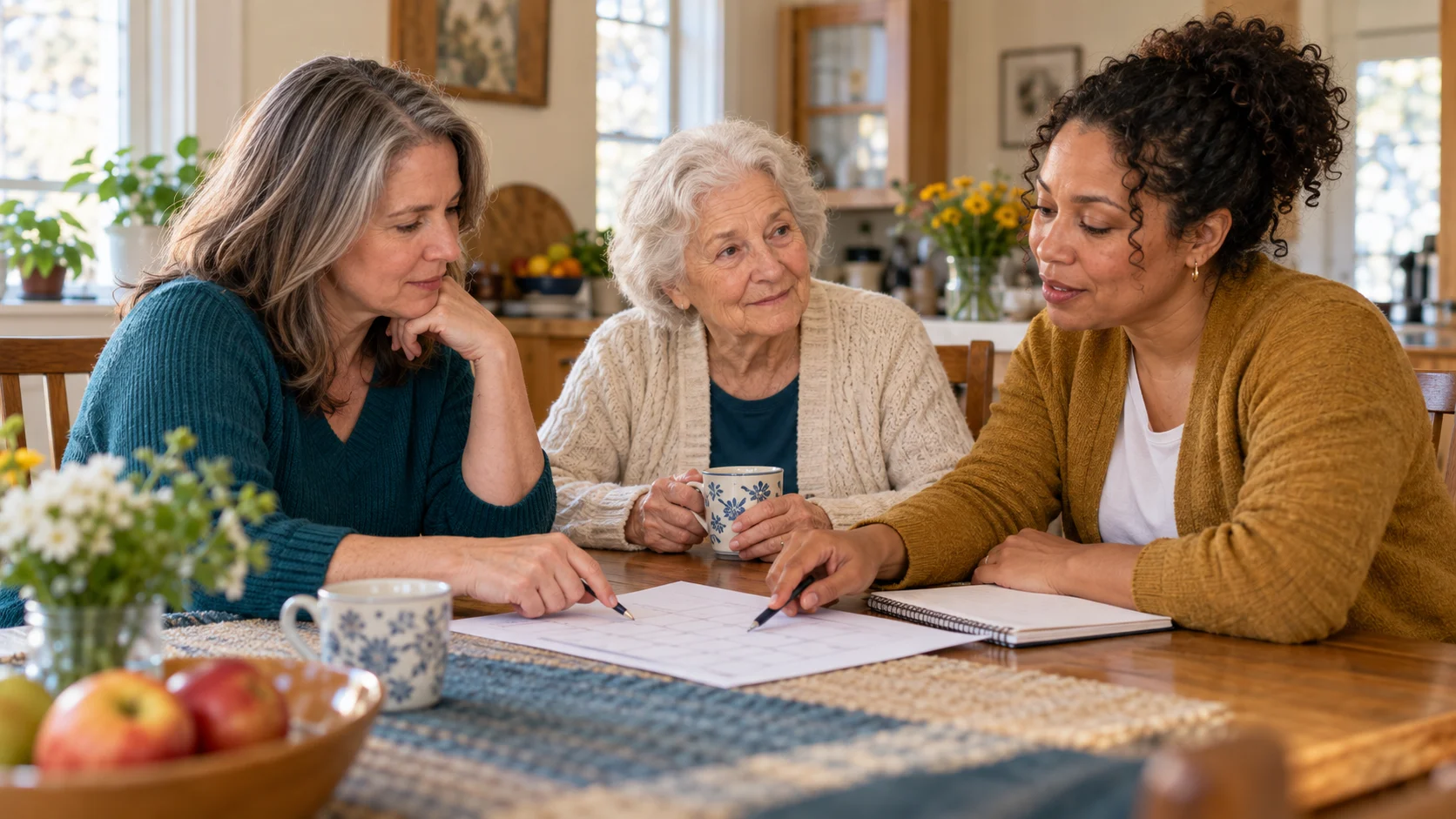
You know your loved one better than anyone. That's one of the advantages of choosing a caregiver directly: you get to decide who is the right fit. This guide gives you questions that go beyond a resume, so you can see how a candidate actually thinks.
Before Interviews: Write Down What a Good Day Looks Like
Start by describing your loved one's day in a few lines. It helps you know what to ask, and it gives candidates something real to respond to.
- When do they wake, eat, rest, and go to bed?
- What activities do they enjoy, and what do they used to love?
- What tends to upset them? Noise, being rushed, certain times of day?
- What usually helps them feel calm?
- How do they communicate now?
- What help do they need with personal care, and how do they feel about it?
Share a version of this with each candidate. Their questions back to you can tell you a lot.
Ask About Experience, Specifically
"I've worked with dementia" can mean many things. Ask for detail:
- How many people living with dementia have you cared for, and for how long?
- At what stages? Early, middle, or later?
- What training have you had related to dementia or memory care?
- What did you find hardest in those roles, and how did you handle it?
Training and certifications are worth asking about, but they aren't the whole picture. Listen for patience, curiosity about the person, and respect in how they talk about past clients.
Use Scenario Questions
Scenario questions show you how a candidate approaches real moments. There's rarely a single right answer. What you're listening for is calm, respect, and flexibility. Try a few of these, adapted to your loved one:
Routines "My mother likes her breakfast at the same time every day and gets anxious if it's late. On a morning when everything is running behind, what would you do?"
Refusal of care "Some days my father refuses to shower. How would you approach that?"
Listen for: not forcing, trying again later, offering choices, finding out what's behind the refusal.
Repeated questions "She asks where her husband is several times an hour. He passed away years ago. How would you respond?"
Listen for: gentleness, not correcting harshly, responding to the feeling behind the question.
Redirection "Late in the afternoon, he often becomes restless and wants to 'go home,' even though he is home. What would you try?"
Listen for: specific ideas, such as a walk, a familiar activity, music, a snack, or a change of scene.
Changes and concerns "What would you do if you noticed she wasn't eating, seemed more confused than usual, or had a new bruise?"
Listen for: noticing, writing it down, and telling the family promptly.
Ask References the Right Questions
When you call references, go beyond "would you hire them again?"
- Did the caregiver care for someone with dementia? At what stage?
- How did they handle difficult moments?
- How did your loved one respond to them over time?
- How did they communicate with the family?
- Were they reliable about time and schedule changes?
Set Clear Duties and Expectations
Once you've chosen someone, the arrangement works best when expectations are clear from the start. As the employer, you set the duties and agree on them together.
- Write down the routine and what matters most to your loved one.
- Agree on the tasks included, and anything that isn't.
- Decide how you'll communicate: a notebook in the home, texts, or a call at the end of each visit.
- Agree on what should prompt an immediate call to the family.
- Plan a check-in after the first couple of weeks to talk about what's working.
Be careful not to ask a caregiver to take on clinical tasks, such as managing complex medications or providing nursing care, unless they're qualified and the arrangement covers it. If your loved one's medical needs are growing, talk with their doctor about what kind of care is needed.
Where the Registry Fits
At Reflections Home Care Registry, we start by learning about your loved one's needs, routine, and personality. We then introduce you to caregivers whose experience could be a good match, with profiles that include their background and availability. You interview them, check references if you wish, and make the final choice. Our hiring and matching process explains each step.
For more general interview questions, see our guide to questions to ask before hiring in-home help. And remember that when you hire directly, your family becomes the employer. Our article on what being a household employer means explains the responsibilities.
If you're looking for a caregiver who understands dementia, contact Reflections Home Care Registry or call 315-497-7200. We'll talk about your loved one and what a good match would look like.
FAQ
What qualities matter most in a caregiver for someone with dementia? Patience, calm, flexibility, and respect matter as much as experience. Look for someone who adapts to the person's routine, avoids arguing or rushing, and knows how to gently redirect.
What questions should I ask a dementia caregiver in an interview? Ask about specific experience and training, then use scenario questions, such as how they would handle refusal of care, repeated questions, or late-day restlessness. Their approach tells you more than a list of tasks.
Can a home caregiver handle medical needs for someone with dementia? It depends on the caregiver's qualifications and your arrangement. Nonmedical caregivers help with daily routines, personal care, and companionship. If medical needs grow, talk with your loved one's doctor about the kind of care required.