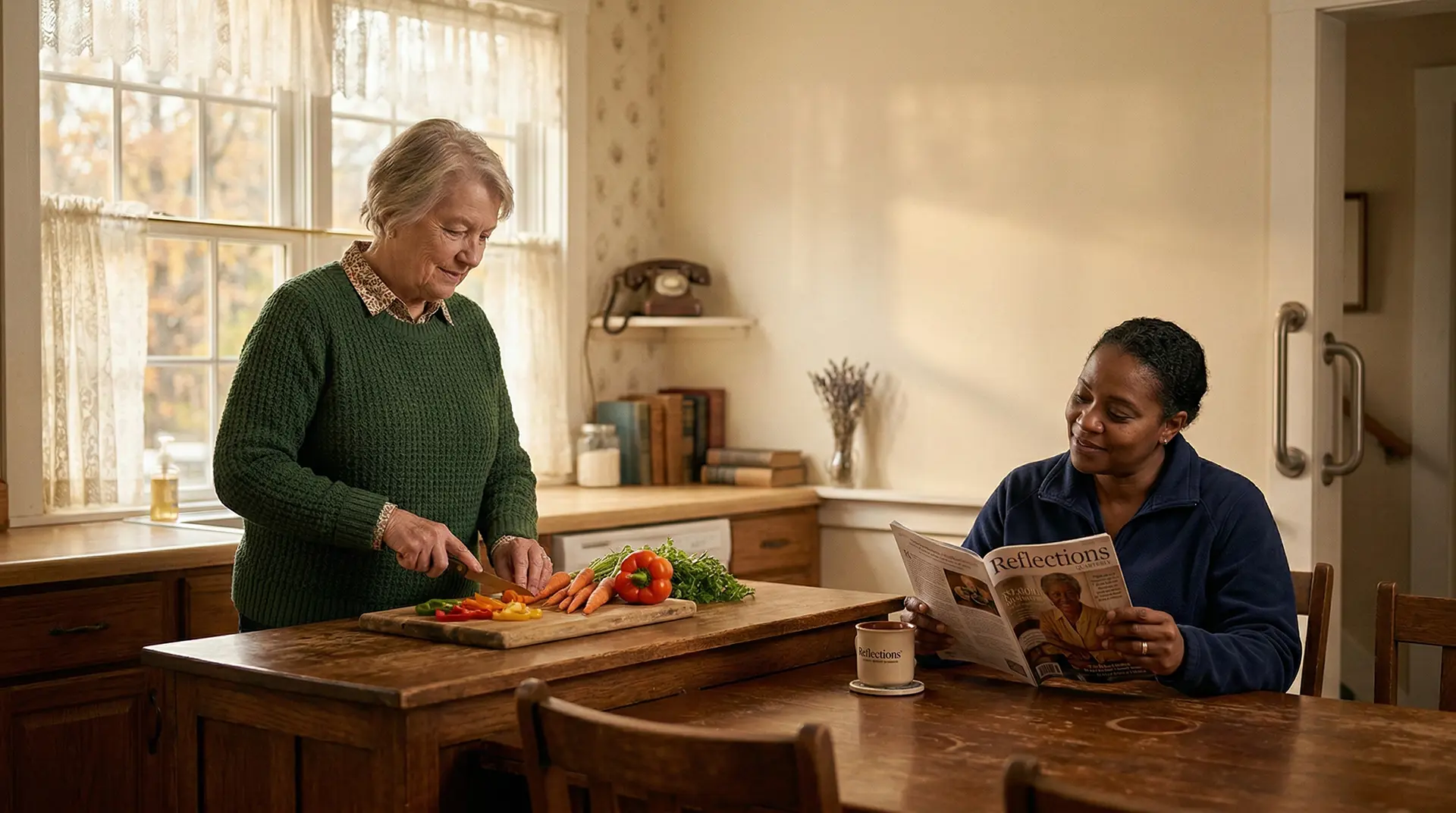

For most families, the idea of bringing someone into a parent’s home doesn’t come up overnight. It’s usually something that builds gradually, a slow realization that the current arrangement isn’t working as well as it used to.
Maybe you’ve been handling everything yourself, checking in daily, managing appointments, stopping by to help with meals. Or maybe your parent has been insisting they’re fine while you’ve quietly noticed things slipping. Either way, the question starts forming: is it time to get some help?
There’s no perfect formula for answering that question. But there are some reliable signals that families can look for.
The Everyday Tasks Are Getting Harder
This is usually the first sign. Not a dramatic decline, just a gradual shift. Cooking becomes more effort than it used to be. Laundry piles up. The house isn’t as tidy as it once was. Bills go unpaid, not because of financial trouble, but because the paperwork has become confusing.
These aren’t emergencies. But they’re indicators that the basic routines of daily life are becoming harder to manage alone. And when those routines start to break down, other things tend to follow.
Safety Concerns Are Growing
Maybe your parent has had a near-miss, a stumble on the stairs, a moment of confusion at the stove, a close call in the bathroom. Or maybe you’ve noticed that the home itself feels less safe than it used to, loose rugs, poor lighting, clutter in walkways.
Safety concerns tend to escalate slowly, and then all at once. A small fall becomes a broken hip. A forgotten burner becomes a real scare. If you’re noticing more “almost” moments, it’s a signal worth taking seriously.
If you’re concerned about safety in the home, the team at Reflections Management and Care can conduct a home safety assessment and help identify practical modifications.
Related reading: The Most Crucial Aging in Place Home Modifications
You’re Carrying More Than You Can Sustain
This one is about you as much as it is about your parent. If you’re the one who’s been holding everything together, checking in multiple times a day, rearranging your schedule around their appointments, losing sleep over whether they’re okay, it may be time to acknowledge that the arrangement has outgrown what one person can handle.
Getting help isn’t giving up. It’s recognizing that good care requires sustainability. If the primary caregiver burns out, the whole system breaks down.
They’re Becoming More Isolated
Social isolation is one of the most common and most overlooked warning signs. A parent who used to be active, visiting friends, attending events, getting out regularly, has gradually withdrawn. They’re spending most of their time at home, alone.
Sometimes this happens because getting out has become physically harder. Sometimes it’s because driving is no longer safe. Sometimes it’s because they’ve lost confidence or motivation. Whatever the reason, isolation accelerates decline in almost every area, physical, cognitive, and emotional.
A companion caregiver can make a meaningful difference here, simply by being a consistent, friendly presence who encourages engagement and social connection.
The Family Dynamic Is Showing Strain
Caregiving changes family relationships. Siblings disagree about what needs to happen. Spouses feel the weight of divided attention. The person doing the most starts to feel resentful, and then guilty for feeling resentful.
When the care situation starts creating tension within the family, it’s often a sign that the demands have exceeded what the family can manage on its own. Bringing in professional help, even a few hours a week, can relieve enough pressure to let family relationships heal.
You Don’t Have to Wait for a Crisis
This is the most important thing we can tell you. You don’t have to wait for a fall, a hospitalization, or a dramatic decline to bring help into the home. In fact, starting earlier tends to go much more smoothly, both for the person receiving care and for the family.
When help is introduced gradually, before it’s urgent, your loved one has time to build a relationship with their caregiver. The transition feels less jarring. And the family has space to adjust without the pressure of a crisis driving every decision.
If you’re reading this and thinking, “Maybe it’s time,” that thought is worth paying attention to.
The Reflections Home Care Registry connects families in Central New York with experienced caregivers for both companion care and personal care. We’ll help you find someone who’s a good fit for your family, on your timeline.